Trading psychology, minus the affirmations
Most edges are lost to the trader, not the market. You don't fix that with willpower, you fix it with structure: a written pre-trade checklist (your indicators are the checklist), a journal that grades process not profit, and rules that remove the in-the-moment decision.
Trading psychology is usually sold as a mindset problem with a mindset solution: stay calm, be disciplined, visualise success. That advice fails because the problem isn't a feeling, it's a decision made under pressure with money on the line. The reliable fix isn't more willpower. It's structure that makes the right decision the default and the wrong decision require effort.
The edge is lost in the gap
There's a gap between the strategy you designed when you were calm and the trade you actually take when price is moving. That gap is where the money leaks: moving a stop “just this once,” entering early because waiting is uncomfortable, doubling down to get back to break-even. The goal of everything below is to shrink that gap until following your own rules is automatic.
Four biases that quietly cost you
- Loss aversion. A loss hurts about twice as much as an equal gain feels good, so traders cut winners early and let losers run, the exact opposite of an edge. A fixed, pre-placed stop and target removes the in-trade negotiation.
- Recency bias. After three losers, a good setup “feels” doomed; after three winners, you size up into the worst trade of the week. A mechanical risk-per-trade rule makes the next trade independent of the last.
- Confirmation bias. Once you want a trade, you'll find an indicator that agrees. Deciding in advance which indicators must align, and in what order, stops you from cherry-picking after the fact.
- Outcome bias. Judging a trade by whether it won teaches the wrong lesson, because good trades lose and bad trades win all the time. Grade the process, not the result.
Your indicators are your checklist
Discretion is where bias enters. The cure is to convert your strategy into a written, yes/no checklist, and your indicators are most of that checklist. For example: Is price on the correct side of Supertrend? Are we at a real level (Market Profile value area or S&R line)? Is the TDI turning in my direction? Is my risk ≤ 1%? If every box isn't ticked, there is no trade. A checklist doesn't make you smarter, it makes you consistent, which is rarer and worth more.
A journal that actually changes behaviour
Most journals are just a P&L spreadsheet, which only reinforces outcome bias. A journal that improves you records the decision. For every trade, log five things: (1) the setup and which checklist boxes were ticked, (2) your planned entry, stop and target, (3) your risk in account percent, (4) whether you followed your rules, a simple yes/no, independent of profit, and (5) one sentence on your state of mind. Once a week, read only column 4. Your job is to push the “followed rules” rate toward 100%. Do that and the equity curve takes care of itself; chase the equity curve directly and the discipline falls apart.
How do you survive a losing streak without tilting?
You decide how a losing streak ends before it begins. Tilt, the urge to trade bigger and faster to win it back, is a response to an open-ended loss, so close the opening: set a hard daily loss limit and a maximum number of trades, and when you hit either, the platform closes for the day. A normal strategy produces clusters of losses purely by chance, so a streak is usually information about variance, not about you or your edge. Treat the limit as protection from your own worst half-hour. A non-repaint trend tool such as Supertrend keeps the next setup objective when your gut wants revenge, but the rule, not the indicator, is what saves the account.
What is FOMO, and how do you stop it?
FOMO, the fear of missing out, is the feeling that a move is leaving without you, and it pushes traders to chase entries with no plan and no level. The cure is a defined setup that acts as a gate: if price has already run and does not meet your checklist, the trade is simply not yours to take. Write the criteria in advance so the in-the-moment urge has nothing to override. Indicators help here only as a gate, not a green light: if price is stretched far from a level, or your momentum read is already extended, that is a reason to wait rather than jump. There is always another setup; there is not always another account.
Why a big win can be more dangerous than a loss
A large win often does more damage than a loss, because it breeds overconfidence. After a winner, the brain quietly rewrites the rules: size up, skip the checklist, take the marginal setup you would normally pass. That is how one good trade funds three poor ones. The defence is the same mechanical risk-per-trade rule that protects you in a drawdown: the next position is sized identically whether the last one won or lost. Logging your state of mind in your journal after a win, not only after a loss, is how you catch the euphoria before it spends the account.
How long does building discipline take?
Longer than a weekend and shorter than you fear, and it is a practice rather than a switch you flip. Discipline is built the way any skill is: by repeating a small, correct action until it is automatic. The repetition here is the loop: take only checklist-valid trades, log the decision, and review each week whether you followed your rules. Expect weeks, not days, and expect to backslide after a loss or a windfall. That is normal. The aim is not to feel perfectly calm; it is to make the process robust enough that an ordinary bad mood cannot blow up the account. Cheap screen time on a small balance is the ideal place to build that habit before it matters.
How do you come back from a blown account?
Start smaller, slower, and on a demo if needed, because the goal after a blow-up is to rebuild the process, not to recover the money quickly. The instinct is to size up and win it back fast, which is the same impulse that caused the damage. Instead, drop to the smallest size your broker allows, or a practice account, and rebuild the habit loop: checklist-valid trades only, every decision journaled, rules reviewed weekly. Treat the lost balance as tuition already paid, and refuse to pay it twice. Confidence does not come from a pep talk; it comes from a stack of recent trades where you followed your own rules, whether they won or lost.
Rules beat resolve
You will not out-discipline a moving market in real time, nobody does. So design the discipline in when you're calm: a maximum number of trades per day, a hard daily loss limit, fixed position sizing, and stops placed at entry, not “watched.” When the rule is written and the size is fixed, there's simply less for emotion to grab. That's the whole game: not feeling nothing, but building a process robust enough that feeling something doesn't matter.
Psychology & journaling questions
What's the single most useful trading-psychology habit?
Keeping a journal that grades whether you followed your rules on each trade, separately from whether the trade made money. It directly attacks outcome bias and turns ‘be more disciplined’ into a number you can actually improve week over week.
How do indicators help with trading psychology?
They externalise the decision. When your entry criteria are written as a yes/no indicator checklist, you remove the in-the-moment discretion where fear and greed do their damage. The indicators don't predict the market, they keep you consistent.
Do I need expensive software to journal my trades?
No. A spreadsheet with a handful of columns, setup, plan, risk percent, ‘followed rules?’, and a one-line note, outperforms most paid tools, because the value is in the honest review, not the software.
Free indicators that pair with this
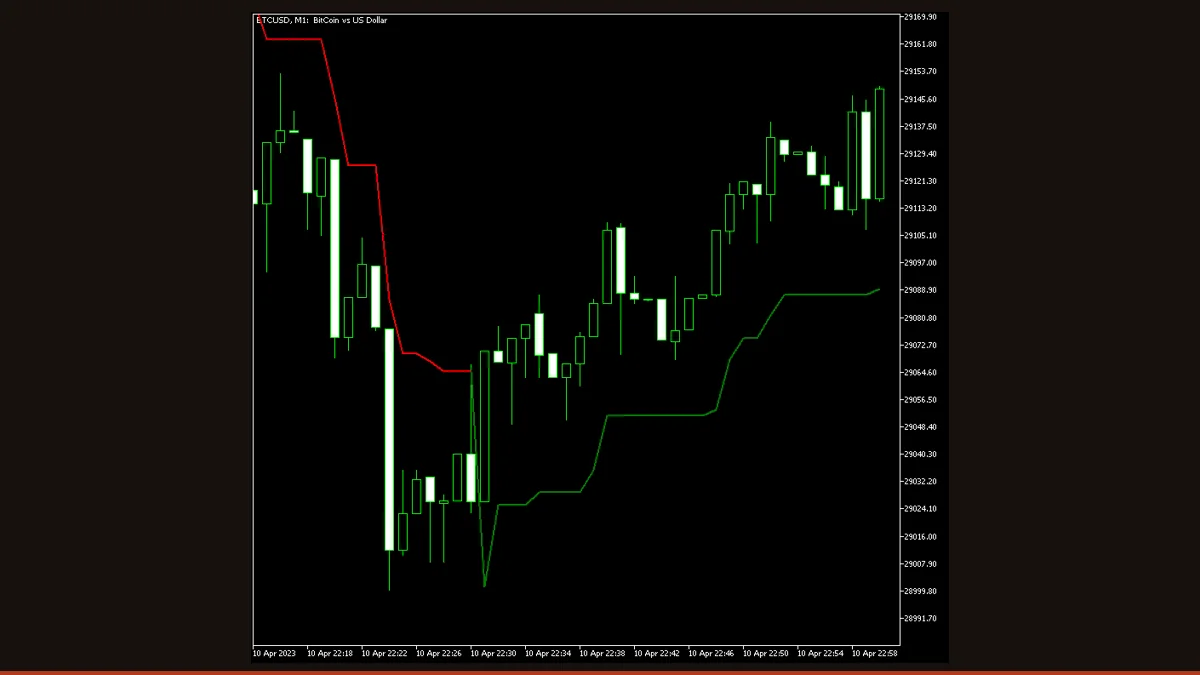
Supertrend
ATR-based trend line that flips color on a confirmed close, a clean, non-repaint trend filter.
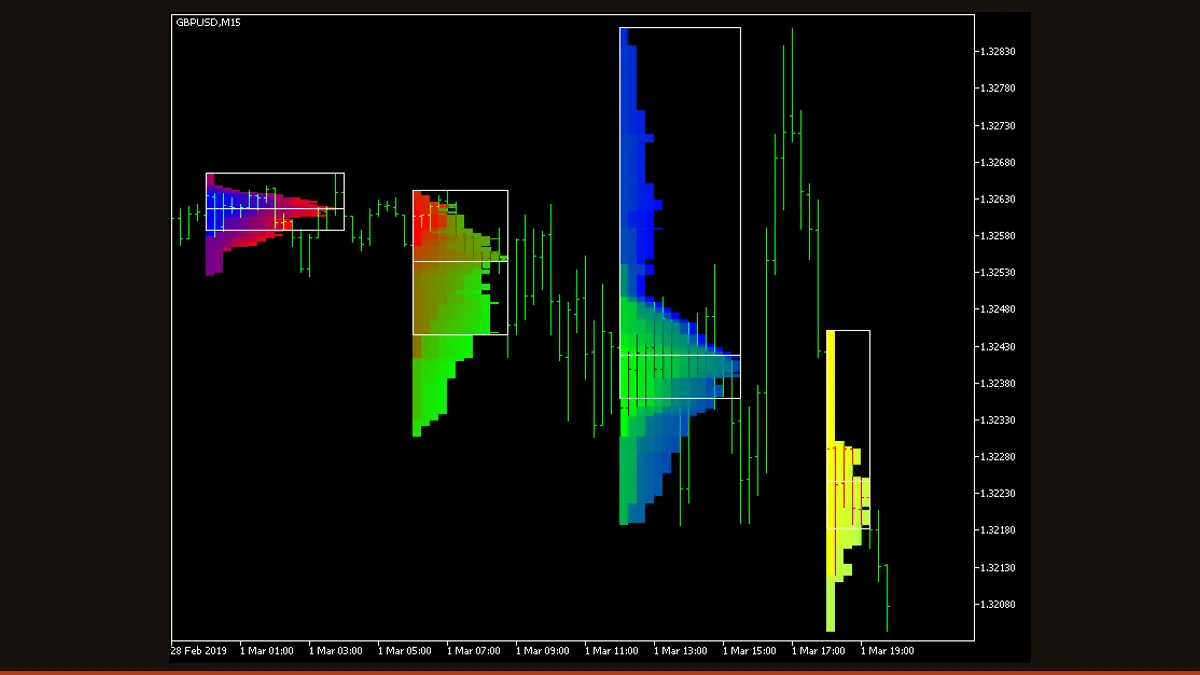
Market Profile
Plots value area, point of control and TPO distribution directly on your MT4 chart.
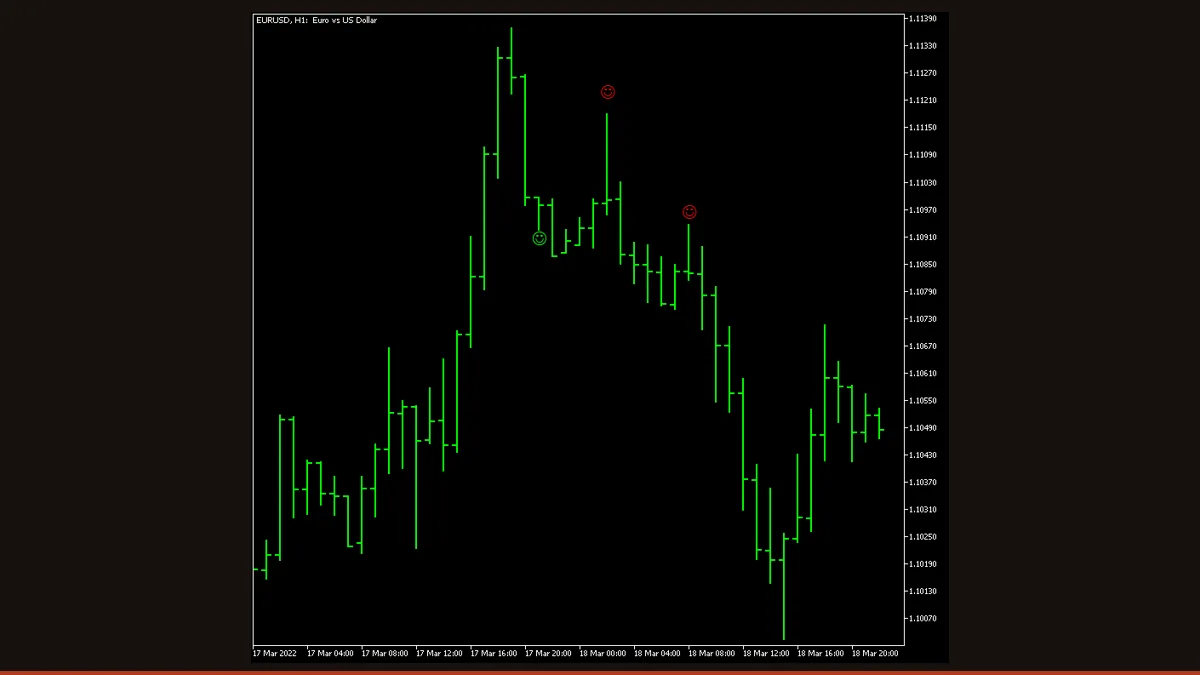
Pin Bar Detector
Automatically marks pin-bar reversals on closed candles, pure price action, no repaint.
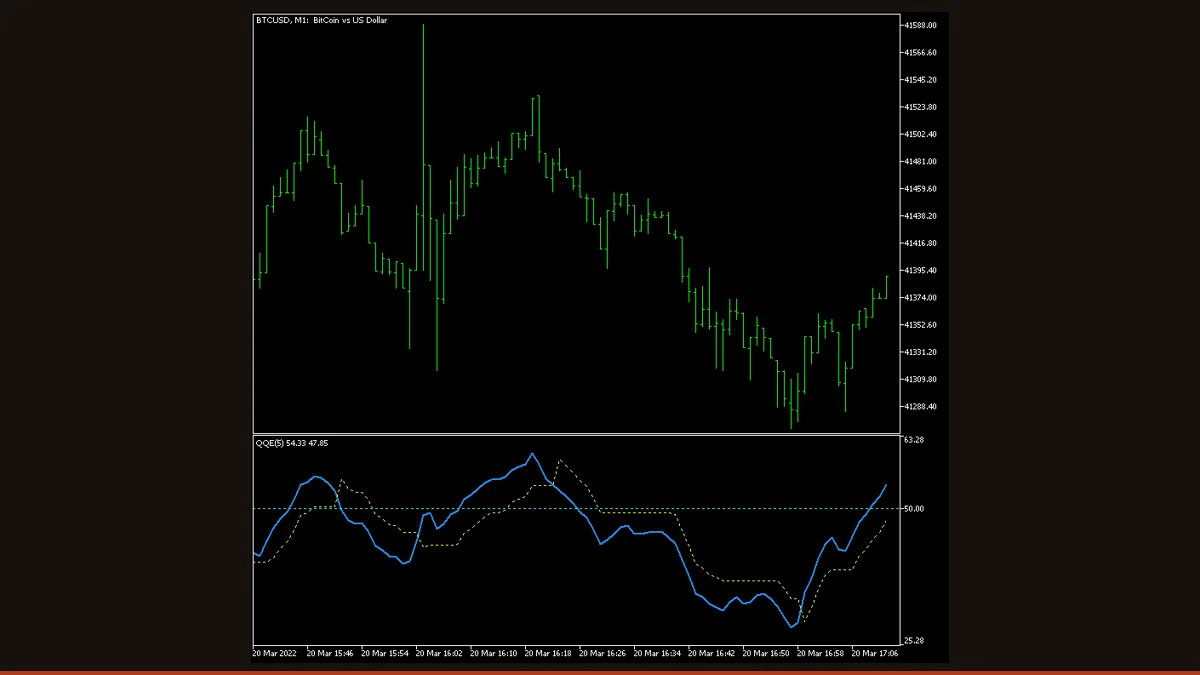
QQE (Quantitative Qualitative Estimation)
Smoothed, ATR-banded RSI oscillator that filters noise out of momentum signals.