Small-account forex strategies that don't blow up
Small accounts fail from over-leverage and over-trading, not from a missing indicator. Risk a fixed small percentage per trade, use free indicators for confluence rather than as buy/sell signals, and let position sizing, not prediction, keep you in the game.
The hardest part of trading a small account isn't finding an indicator, it's surviving long enough for any edge to show up. A $500 or $1,000 account (or a funded-challenge account with a tight drawdown limit) punishes the two mistakes beginners make most: risking too much per trade, and trading too often. No indicator fixes either of those. Your rules do.
Why small accounts really blow up
It's almost never “the signal was wrong.” It's math. If you risk 10% of a small account per trade, a perfectly normal run of five losers in a row, something every strategy produces, cuts the account roughly in half. From there you need a 100% gain just to break even, so the temptation is to size up and “win it back,” which is exactly how accounts go to zero. The fix is unglamorous: risk a small, fixed percentage per trade, commonly 0.5% to 1%, so that a losing streak is an inconvenience, not an extinction event.
Position sizing comes before the indicator
Decide three things before you ever read a chart: how much you'll risk per trade (in account percent), where your invalidation level is (the price that proves the idea wrong), and therefore how big the position can be. A free position-size calculator or a simple spreadsheet turns those three numbers into a lot size. Only after that math is settled does an indicator earn a say in whether you take the trade at all. This ordering, risk first, entry second, is what separates traders who last from traders who don't.
Use indicators for confluence, not commands
The fastest way to ruin a small account is to treat an arrow indicator as a buy/sell button. Indicators are lagging summaries of price; they describe what has already happened. Used well, they form confluence, several independent reads agreeing, rather than a single trigger. A practical, free three-part stack:
- Context (trend): a non-repaint trend tool such as Supertrend or Heiken Ashi to define which direction you're allowed to trade.
- Location (level): a structure tool such as support & resistance, Market Profile value areas, or Murrey Math lines to trade at a level rather than in the middle of nowhere.
- Timing (momentum): an oscillator such as the Traders Dynamic Index or QQE to confirm the move is turning your way before you commit.
When all three line up, you have a reason. When they disagree, the highest-probability action is usually to do nothing, which, on a small account, is a position in itself.
The reality of funded and challenge accounts
Funded-trader programs add a hard rule the indicator can't see: a maximum daily and total drawdown. That makes risk control the entire game. Most blown challenges aren't from a bad strategy, they're from one oversized revenge trade after a normal loss. Treat the daily loss limit as a hard stop on you, not just the account: define a maximum number of trades and a maximum daily loss in advance, and close the platform when you hit either.
What is a sensible risk-to-reward target?
Aim for trades where the potential reward is a clear multiple of the risk, commonly around two to one or better, so you do not need to be right often to stay afloat. What matters is expectancy, the combination of how often a setup works and how much it returns when it does, not your hit rate alone. A method that is right less than half the time can still grow an account if its winners are meaningfully larger than its losers, and a method that is right most of the time can still bleed if a single loss erases ten small gains. Decide the target and the invalidation level before you enter, let the structure on the chart set them rather than a round number, and never widen a stop just to avoid being wrong.
How many trades should a small account take?
Fewer than you think, and far fewer than the market tempts you to. Overtrading is the quiet killer of small accounts: every extra trade pays spread and commission and adds a fresh chance to break a rule, while rarely adding edge. Treat trades as scarce. A practical discipline is to cap the number of trades per day or week in advance, and to require that every box on your checklist is ticked before one counts. If the setup is only “close,” it is a no-trade. Selectivity also protects your attention: three well-chosen trades you can actually manage beat fifteen you cannot. On a small balance, patience is not passivity; it is the position.
Which timeframe suits a small account best?
Higher timeframes are usually kinder to a small account than the one-minute and five-minute charts beginners gravitate to. Lower timeframes magnify noise, spread, and emotional churn, and they demand more screen time than most part-time traders can give. The four-hour and daily charts produce fewer signals, but each one is cleaner and easier to plan around a fixed stop. A non-repaint trend tool such as Supertrend, or a structural map like Donchian Channels, gives a far more reliable read on H4 or D1 than on M5, where the same tool whipsaws. Trade the timeframe you can actually watch without rushing.
How spreads and commissions quietly tax a small account
Trading costs scale with frequency, and a small account feels them most. Every trade pays the spread and, on many accounts, a commission, so a strategy that trades constantly on a tiny stop can lose to costs even when the calls are right. This is why scalping a small account is so hard: the edge per trade is thin and the cost per trade is fixed. Favour setups with a wider, structural stop and a worthwhile target, so the cost is a small fraction of the move rather than half of it. Knowing your all-in cost per trade, and refusing trades whose target does not clear it several times over, is itself a risk-control rule.
A simple weekly routine
Structure beats motivation, so give the week a rhythm. Before the week starts, mark the levels that matter with a tool such as support & resistance or Market Profile, and note which pairs are trending using Supertrend. During the week, act only when price reaches one of those pre-marked areas and your momentum read agrees. At the week's end, review your journal rather than your profit, and score how often you followed your own rules. That loop (plan, then execute by checklist, then review the process) is what turns free indicators into a repeatable method instead of a pile of lines on a chart.
Realistic expectations
A small account grows slowly or it doesn't grow at all, those are the honest options. Anyone promising fast multiplication is selling leverage, and leverage is what kills small accounts. The goal at this stage isn't income; it's to build a rule-following habit cheaply, on a small balance, so the process is automatic by the time the account (or a funded one) is large enough to matter. The free indicators on this site are the cheap part. The discipline is the expensive part, and it's the part that actually compounds.
Small-account questions
What's the best indicator for a small forex account?
There isn't one, and any site that names a single ‘best’ indicator is guessing. For a small account, a small stack that gives you trend context, a level to trade at, and momentum timing is more useful than any one tool. Risk control matters far more than indicator choice.
How much should I risk per trade on a small account?
A common, conservative guideline is 0.5% to 1% of the account per trade, so that an ordinary losing streak doesn't threaten the account. This is general educational information, not personal financial advice; your own risk tolerance and rules are yours to set.
Can free indicators really compete with paid ones?
For the core jobs, trend, momentum, levels, volatility, yes. The open-source indicators here implement the same classic calculations that paid products repackage. What you pay for with premium tools is usually support and marketing, not a fundamentally different signal.
Free indicators that pair with this
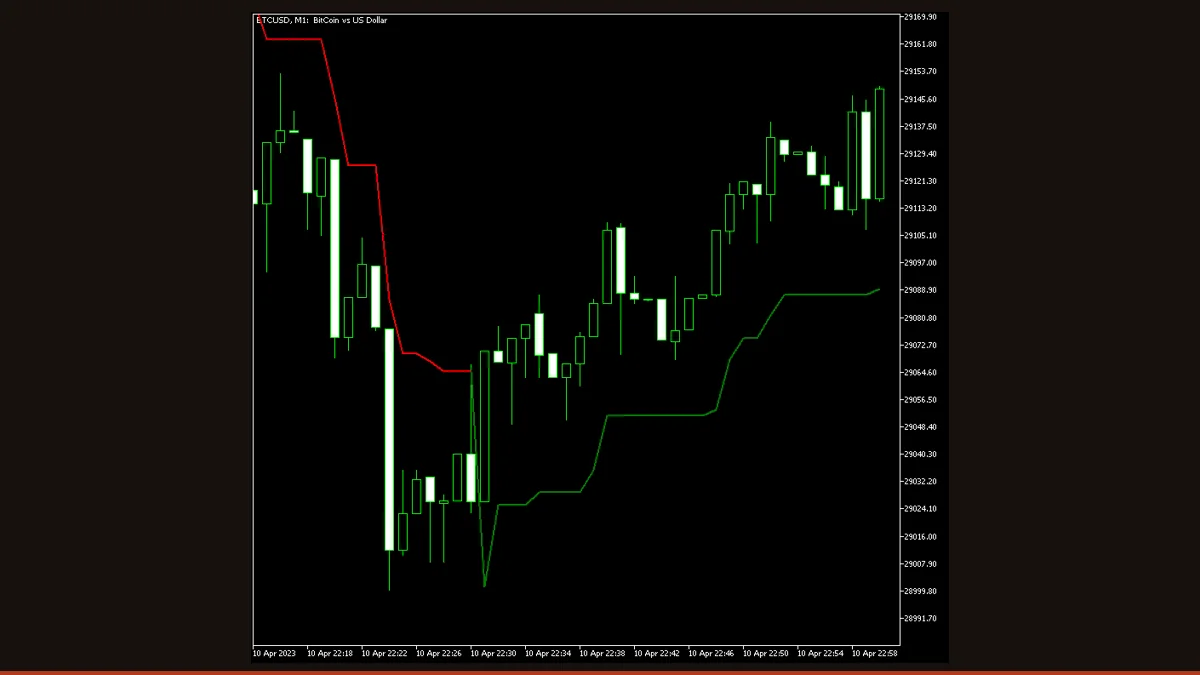
Supertrend
ATR-based trend line that flips color on a confirmed close, a clean, non-repaint trend filter.

Traders Dynamic Index (TDI)
RSI, volatility bands and signal line fused into one momentum dashboard.
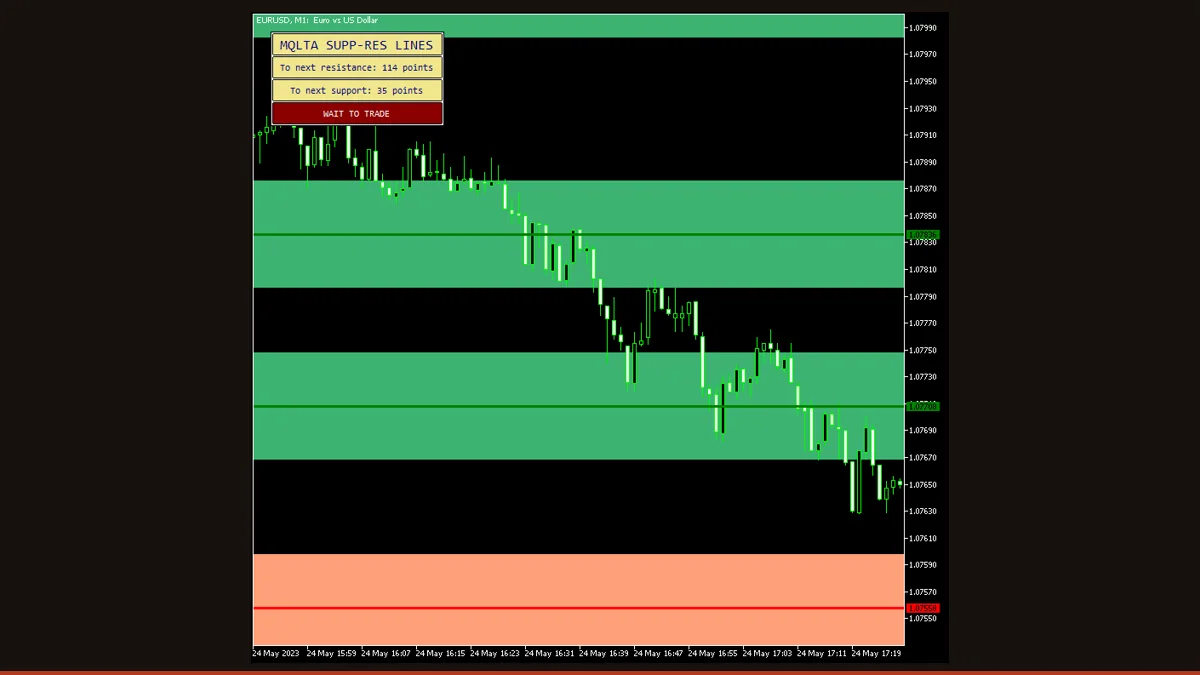
Support & Resistance
ATR-and-fractal-based horizontal levels that mark where price has actually reacted.
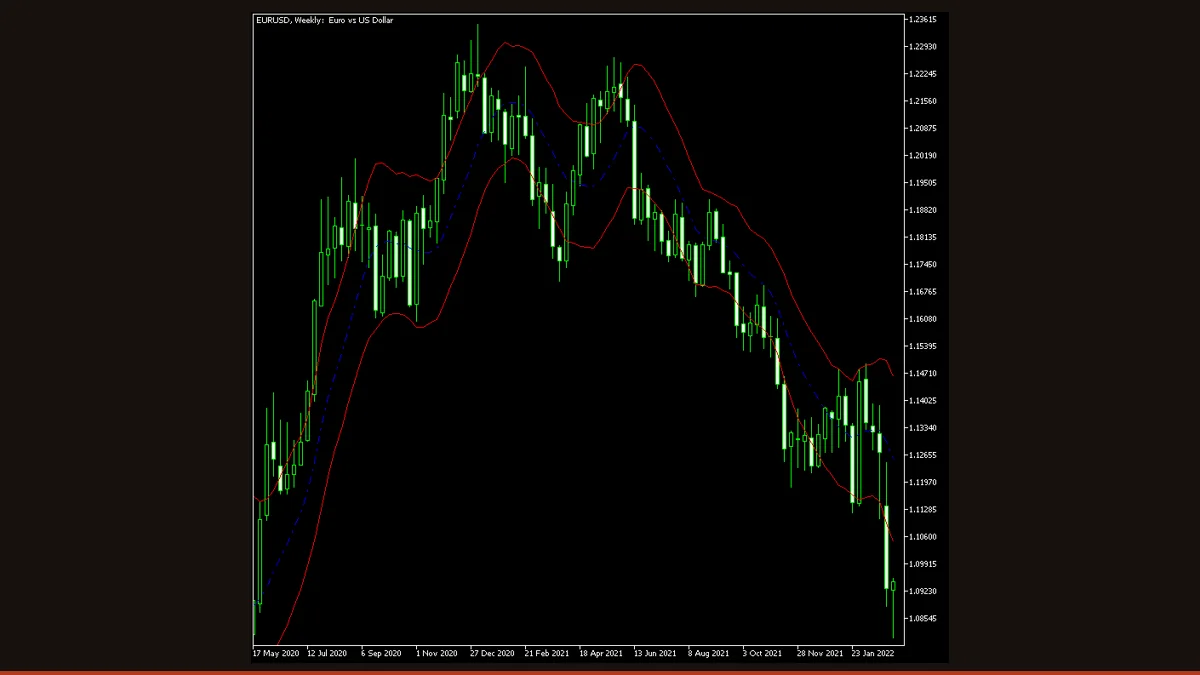
Keltner Channel
ATR-based envelope around a moving average for trend-pullback and breakout reads.